
Advanced Export Practices Followed by C Indian Spices Exports
In global spice trade, chilli exports are high-value but high-risk. When shipments move in container loads of 50–100 metric tons, even a 1% quality deterioration—whether colour fading, moisture increase, or mold—can result in significant financial loss and buyer dissatisfaction.
At C Indian Spices Exports, chilli quality management goes far beyond basic hygiene and moisture checks. We follow a farm-to-container quality control system, combining traditional crop knowledge with modern export technology, ensuring our chillies arrive overseas with colour, pungency, and safety fully intact.
This article explains the step-by-step, export-grade practices used to maintain chilli quality in large-scale international shipments.
Step 1: Precision Variety Selection Based on Target Market
Not all chilli varieties perform equally across global markets. Successful exporters match variety characteristics to buyer geography.
Market-Specific Variety Matching
This strategic selection reduces post-shipment rejection risk.
Step 2: Controlled Field Pre-Conditioning Before Harvest
Quality preservation starts before harvest, not after.
Pre-Harvest Conditioning Practices
These steps increase storage life and transport resilience.
Step 3: Advanced Harvest Timing & Batch Uniformity
Large-scale exporters avoid single-stage harvesting.
This approach minimizes cracking, moisture migration, and fungal risk.
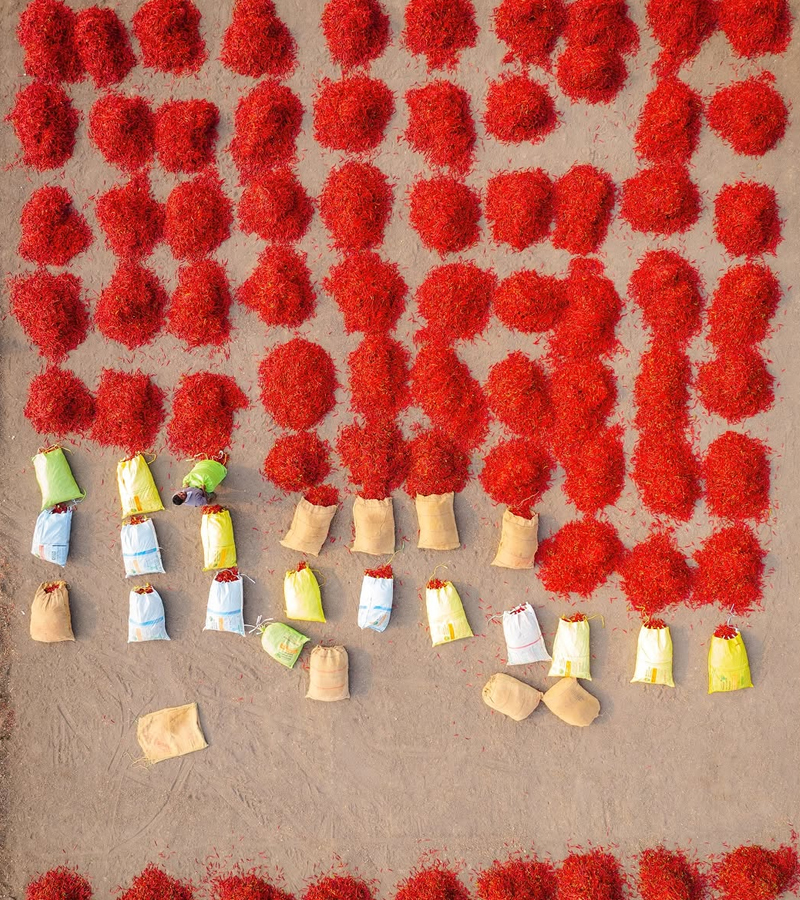
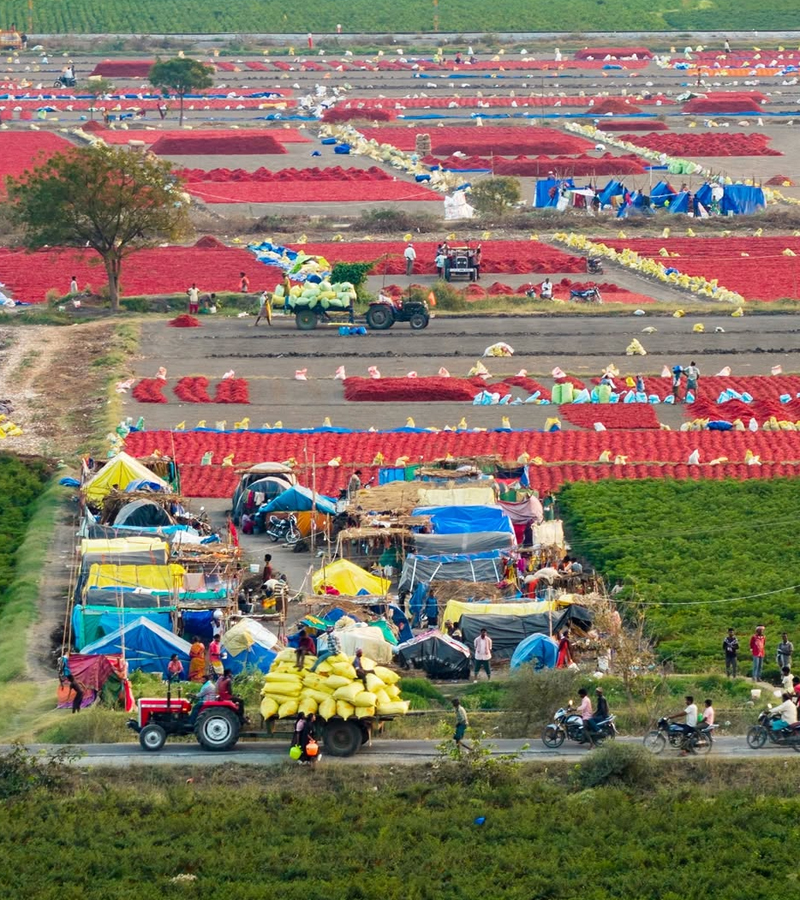
Step 4: High-Efficiency Drying Beyond Open Sun Drying
While sun drying is traditional, export-grade chillies require controlled drying environments.
Modern Drying Techniques
Final moisture is stabilized at ≤7%, ideal for export storage.
Step 5: Colour Stabilization & Oxidation Control
Colour fading during transit is a major rejection reason.
Colour-Locking Measures
These measures extend bright-red colour life by 30–45 days, ideal for long voyages.
Step 6: Mycotoxin Prevention Beyond Routine Testing
Testing alone is not enough—prevention is critical.
Advanced Mycotoxin Control
This significantly reduces aflatoxin and ochratoxin risk.
Step 7: Storage Microclimate Engineering
Instead of controlling only warehouse air, we manage microclimates within chilli stacks.
This prevents internal heating and moisture buildup.
Step 8: Container Transit Risk Management
Container sweat is one of the biggest threats in sea shipments.
Container-Level Controls
These steps protect quality during long sea routes.
Step 9: Market-Specific Packaging Strategy
Packaging is adapted to climate and buyer requirements.
Correct packaging prevents moisture ingress and handling damage.
Step 10: Continuous Quality Monitoring at Three Stages
Top exporters test multiple times, not once.
This triple-check system drastically reduces rejection risk.
Why Global Buyers Trust C Indian Spices Exports
We don’t just export chillies—we protect their quality until they reach the buyer.

Authentic spices sourced straight
from trusted Indian farms.

Sun-dried, lab-tested, and
globally compliant.

Skilled women ensuring precision and consistency.

Serving buyers across UAE, USA,
UK & beyond.
Indian Spice Exports © 2026 All Rights Reserved. Developed by Aaruhi software solutions